India vs New Zealand 1st ODI: Why India Chased 143
The India vs New Zealand 1st ODI ended in a five-wicket win for India at Eden Park in Auckland on 4 November 2026. New Zealand made 185 in 40.2 overs, but India needed 143 from 32 overs after rain interrupted the chase. Virat Kohli scored 74 from 51 balls, and India reached 143 for five in 22.4 overs to take a 1–0 lead in the five-match series.
India vs New Zealand 1st ODI score at a glance
- New Zealand: 185 all out in 40.2 overs
- India: 143 for five in 22.4 overs
- Revised target: 143 from 32 overs under DLS
- Result: India won by five wickets
- Player of the match: Anshul Kamboj, two wickets for 22 runs
The completed match scorecard shows the two totals side by side. The difference between them comes from the revised conditions for India’s innings.
Why India needed 143 after New Zealand scored 185
Rain reduced the time available for India to bat. The Duckworth–Lewis–Stern method, usually shortened to DLS, recalculates a target when weather cuts short a limited-overs match. It estimates the batting resources available to each team based on both the number of overs remaining and the wickets in hand. A side with several wickets left can generally take more risks in the same number of balls than a side close to being bowled out.
The ICC’s guide to DLS explains why a simple comparison of runs per over misses part of the picture. In Auckland, New Zealand’s innings still counted as 185. India’s winning target changed to 143 because it had fewer overs available after the interruptions. The scorecard records both figures for different purposes.
India reached the target with 56 balls left in its revised allocation. Cricket’s over notation counts legal deliveries rather than fractions of ten. In this case, 22.4 means 22 completed overs and four legal balls of the next over. The five-wicket margin refers to the wickets India still had available when it reached 143.
How Kohli and Gill shaped the chase
Kohli and captain Shubman Gill put on 113 for the second wicket after India lost an early wicket. Gill made 37 and Kohli reached his 80th ODI half-century, according to Reuters’ match report. Their stand accounted for most of the revised target and gave India room to absorb the wickets that fell later.
Kohli’s 74 was just over half of India’s final total. He was dismissed before the finish, but the partnership had already done most of the work. KL Rahul and Naman Dhir were at the crease when India completed the chase. The final score of 143 for five captures both parts of the innings: a substantial second-wicket stand and a finish with several wickets down.
Why Kamboj took the match award
India’s bowlers set up the chase by dismissing New Zealand with 58 legal balls unused in its 50-over innings. Arshdeep Singh took four wickets and Gurnoor Brar took three. Kamboj conceded only 22 runs across his 10 overs, a rate of 2.2 runs per over, and took two wickets. Kohli also helped in the field with a diving slip catch off Kamboj to remove Nathan Smith.
Tim Seifert top-scored for New Zealand with 38. The hosts struggled to build an innings around him, and India’s pace bowlers accounted for nine wickets between Arshdeep, Brar and Kamboj. Those wickets were a separate part of the result from the rain adjustment: they kept New Zealand to 185 before India began batting.
When is the second India vs New Zealand ODI?
The teams are scheduled to meet again on Saturday, 7 November, at Sky Stadium in Wellington. The New Zealand Cricket fixture list has the full tour schedule. India heads to Wellington one up in the five-match ODI series.
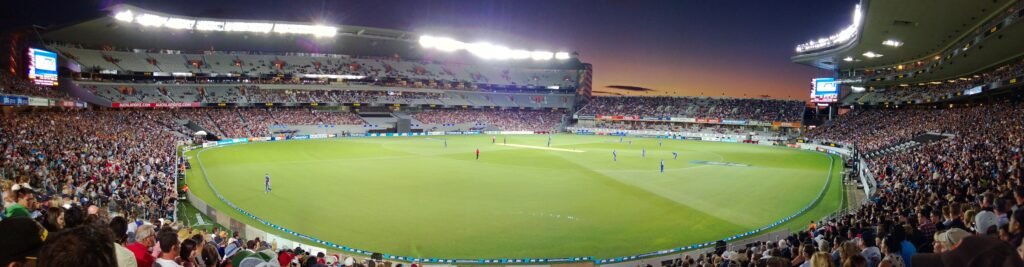
Archive photo of Eden Park in 2013 by Kiwi Flickr, licensed under CC BY 2.0. Display crop may vary.