Royal Enfield Continental GT 750 vs GT 650: What India Buyers Know
Royal Enfield showed the Continental GT 750 at EICMA in Milan on 3 November 2026. If you are comparing the Continental GT 750 vs GT 650 in India, the immediate difference is availability. The GT 650 has an Indian product page and dealer test rides. The Royal Enfield India homepage invites readers to sign up for GT 750 updates, and as of 5 November the company had yet to give the new bike an Indian launch date or price.
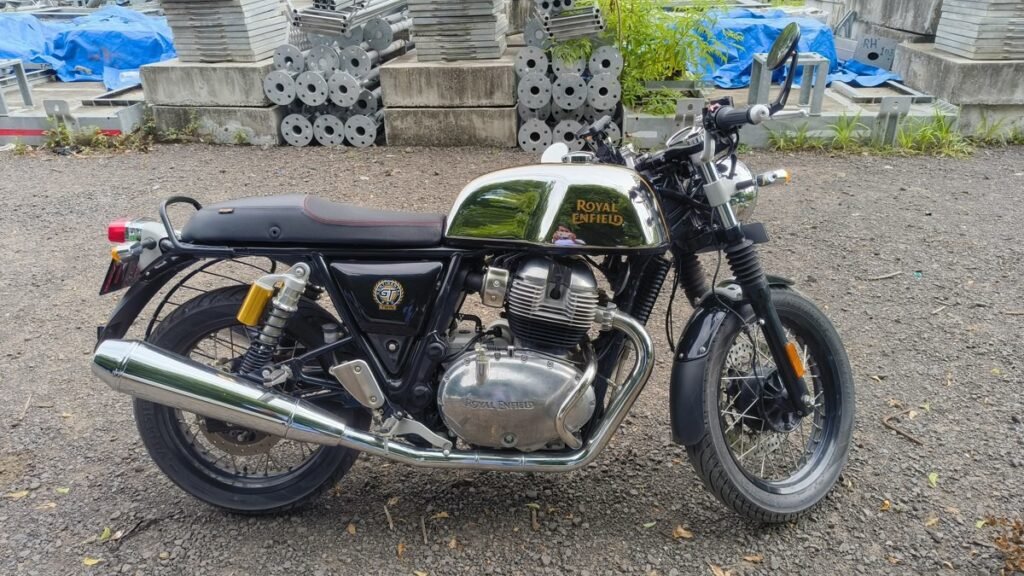
Featured photo shows the Continental GT 650. Photo by Kiranpawar3210 via Wikimedia Commons, cropped to 16:9 and shared under CC BY-SA 4.0.
What changes on the Continental GT 750?
The headline change is the engine. EICMA reporting from The Economic Times identifies the engine as a 743 cc parallel twin shared with the Himalayan 750. Royal Enfield also identifies the Himalayan engine as a 743 cc unit. For the current GT 650, the manufacturer lists a 648 cc parallel twin and a six-speed gearbox. The extra 95 cc tells you how much bigger the engine is. To judge whether it pulls harder when overtaking or feels smoother at highway speeds, buyers will need the GT’s own output figures, gearing and road tests.
The show bike had two front brake discs, and its cockpit paired analogue gauges with a smaller TFT display. The published specifications for the Indian GT 650 give buyers an established baseline. For a fair comparison, check the final 750 brake and tyre specification for the exact variant you would buy. Two discs are an obvious visual change, but lever feel and stopping performance also depend on the tyres, hardware and calibration.
Check the riding position before choosing a variant
Cartoq’s EICMA coverage describes both an unfaired GT 750 and a version with a small fairing and lower bars. That gives prospective buyers a reason to check the exact model pictured in any listing. If your riding includes slow traffic or long stretches on the highway, the reach to the bars and the position of the footpegs may matter more than the bodywork. On a test ride, try a slow U-turn and see how easily you can move the bike around when parking.
The GT 650 already has low clip-ons and rear-set footpegs, so a ride on it can help you decide whether the basic café-racer posture suits you. Try it in the footwear you normally ride in. Pay attention to wrist load when the bike is moving slowly, how far you can turn the bars without shifting in the seat, and whether the peg position is comfortable after the initial few minutes.
Ask about puncture repairs and wheel options when you compare quotes. The show bikes included both spoked and alloy wheels. The tyre setup on the version that reaches your dealer will determine whether a roadside puncture can be handled with a tubeless repair kit or needs a tube repair.
Keep a short comparison sheet for each dealer visit. Record the exact variant, wheel type, included accessories and the items charged separately in the quote. Add your own notes about reach to the controls and low-speed comfort immediately after the ride. Using the same questions for both motorcycles will make the eventual price comparison easier to interpret.
Should Indian buyers wait for the GT 750?
Test ride the 650 now if you need a bike soon. Ask a dealer for a written on-road quote for the colour and wheel configuration you want, including insurance and any accessories. If you can wait and the larger engine or twin front discs are important to you, look for an official India price, a confirmed variant list and local test-ride availability before making a deposit.
Read reports of a possible 2027 arrival as an estimate until Royal Enfield gives an India-specific date. A show debut and a local delivery window are separate milestones, as with the Hero Xpulse 450’s EICMA reveal. For the GT 750, the first useful sign will be an Indian product or booking page that names the variants and gives buyers a way to confirm delivery terms.